Dark kitchens in Spain: the operational habits that separate the profitable ones
In a kitchen with no dining room there is no waiter to rescue a badly assembled order and no lingering over coffee to make up for a small bill. The entire margin rides on the operation, and an operation can be measured.

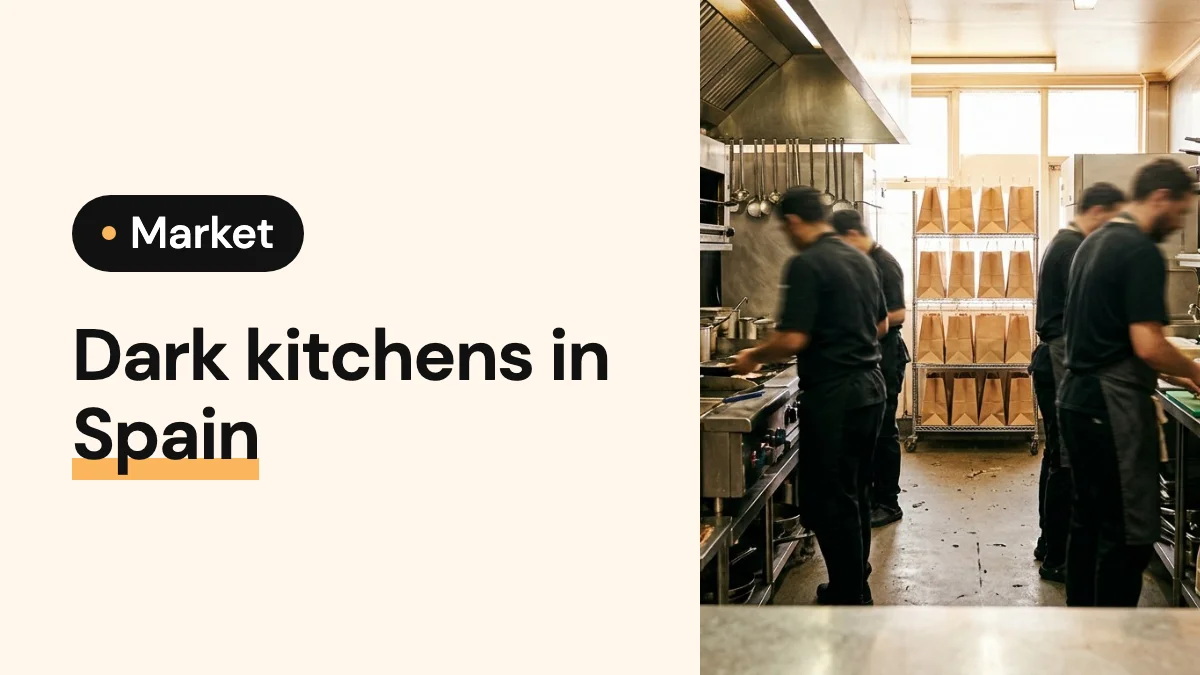
We have spent years walking into delivery kitchens across Spain: large chains, platform-native brands and single-site dark kitchens. The difference between the ones making money and the ones just surviving is almost never the product or the marketing. It is how many small things slip through every shift.
What makes a dark kitchen profitable in Spain?
A dark kitchen's profitability rests on four operational levers: every order leaving complete (each mistake costs the refund plus the food plus the admin), the platforms' quality metrics staying green so you do not lose visibility, avoidable cancellations staying low, and unfair refunds being recovered with evidence rather than absorbed as a fixed cost.
What a dark kitchen is and is not
A dark kitchen is a kitchen that produces for delivery only: no dining room, no bar and no customers on site. It can be a brand's own unit, a shared space housing several kitchens or a virtual brand prepared inside an existing restaurant.
What matters operationally is what you lose along with the dining room: the correction loop. In a restaurant, if a dish comes out wrong, somebody sees it before it reaches the table and, if it does reach the table, it is sorted there. In delivery, the mistake is discovered three kilometres away, in the form of a complaint, fifteen minutes later.
The four leaks that take the margin
1. Incomplete orders
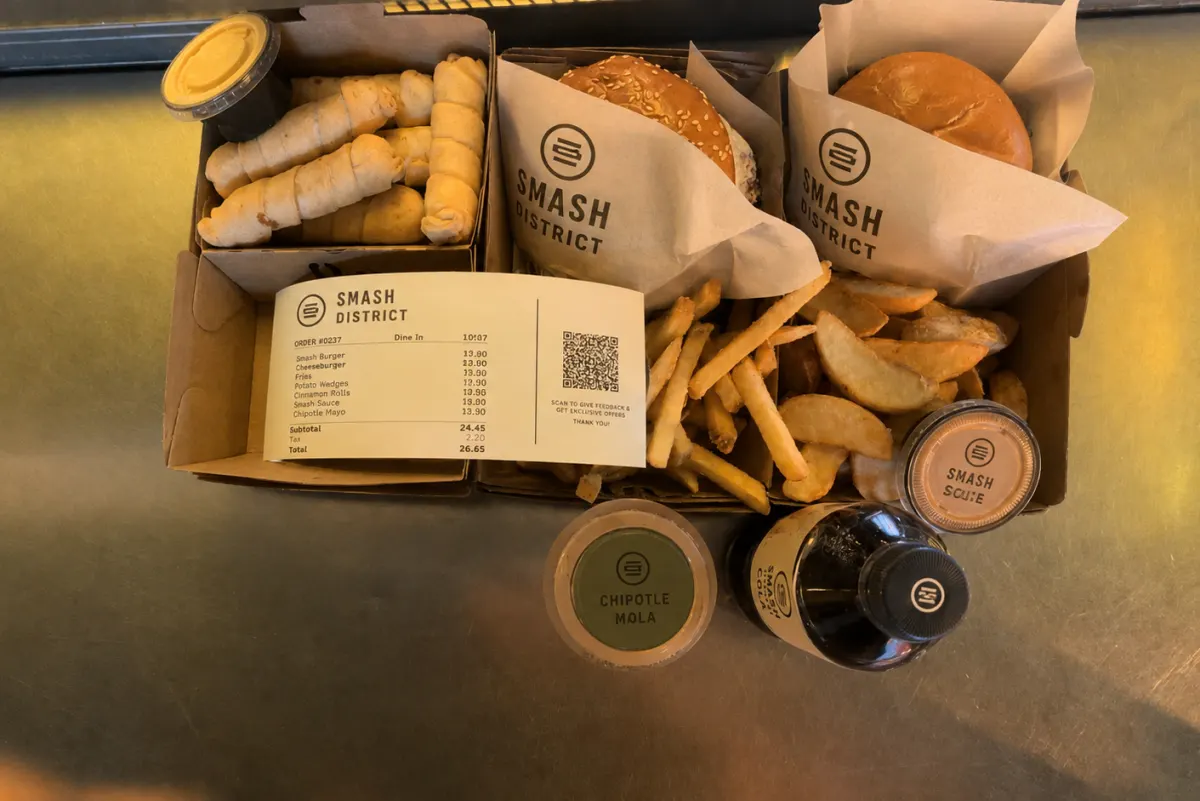
This is leak number one and the most underestimated. The typical mistake is not a forgotten main, it is the drinks, the sauces and the extras: small, high-margin items added at the end and forgotten when everyone is in a hurry.
In kitchens that verify their orders we see double-digit intervention rates (Bronze estimate from its platform data, July 2026): at Nugu Burger, with 99.2% of orders verified, more than 11% of them had to be corrected. Without verification, that 11% goes out of the door.
2. Refunds absorbed without a second look
Many dark kitchens treat platform adjustments as a fixed cost of the channel, much like commission. They are not: a portion of them does not correspond to real mistakes and can be disputed. We explain it in detail in our guide to disputing unfair refunds.
3. Avoidable cancellations
An out-of-stock item still on the menu, badly calibrated prep times, orders left unconfirmed at peak. On top of the lost order, they hit your fulfilment metric, which is what decides your position in the app. Here is how to tell them apart and how to reduce them.
The platforms publish it. Glovo puts cancellation rates, along with ratings and delivery time, into the performance factor of its ranking system for placement in the app, and on Uber Eats the missed order rate is one of the five metrics of its Top Eats programme.
4. The manager's time
At a site with no dining room, the manager is the bottleneck for everything: production, incidents, claims, platforms. Every minute spent reconstructing what happened on an order from two days ago is a minute not spent on the line.
The dashboard: six metrics and their warning signs
| Metric | What it measures | Warning sign |
|---|---|---|
| Verification coverage | The share of orders checked before they go out. | A sustained fall: the first symptom that the shift has stopped doing it. |
| Intervention rate | Orders where something had to be corrected. | A rise on one specific product or shift. |
| Net refund rate | The share of orders that end up costing money. | Above 1% in a site with verification (Bronze platform benchmark, July 2026). |
| Avoidable cancellations | Orders lost to internal causes. | A concentration in one time slot. |
| Actual prep time | How long the kitchen takes versus what the app promises. | A steady gap during the rush. |
| Reviews by cause | Repeated reasons in negative ratings. | The same cause three weeks running. |
None of the six needs a complex system to get started. What they need is to be measured the same way every time and looked at together, by site and by shift. Most kitchens have three of the six in some dashboard and the other three in somebody's head.
Multi-brand: the mistake multiplier
From what we see in the kitchens running on Bronze, a large share of the Spanish model is multi-brand (Bronze estimate from its platform data, July 2026): the same kitchen cooks for two, three or five different brands across several aggregators. It is a smart way to use installed capacity and, at the same time, a machine for generating mix-ups: items with similar names, different packaging per brand and dockets arriving through different channels.
In those cases, verifying against the specific order for that brand stops being a luxury. It is what keeps one brand's bag from going out with another brand's packaging.
Which technology is worth it, and in what order
- Order integration: orders from every platform arriving on their own, with no loose tablets and no double entry.
- Verification on the pass: one photo per order checked against its docket, flagging problems before the bag is sealed. It is the highest-return lever because it prevents the mistake rather than managing it.
- Claims handled with evidence: disputing with the photo of the order, not with the shift's recollection.
- A single dashboard: the same data from every site and brand in one place, so you can compare.
At Bronze we cover that path with Tracker for verification, Riders for organising pickups and Feedback for reviews, all in the same dashboard. We are a pioneer in Spain in applying computer vision to delivery order verification, and the figures we work with are public: more than 5 million orders verified across more than 450 restaurants, together accounting for over £688M in GMV, and £1.89M recovered for our customers through disputes (July 2026 figures).
What to take away
- In a kitchen with no dining room, a mistake is not corrected: it is refunded. Preventing it is worth more than managing it.
- Six well-measured metrics explain almost the entire margin gap between two similar kitchens.
- The multi-brand model multiplies volume and the likelihood of mistakes alike: verifying against each order is what keeps it in check.
Sources
- Glovo, ranking system for placement in the app: sell.glovoapp.com. Consulted 10 September 2026.
- Uber Eats, Top Eats programme: merchants.ubereats.com. Consulted 10 September 2026.