Deliveroo refund disputes: how to challenge a charge that isn’t yours
A refund charged back to your kitchen is not final. Deliveroo gives partners a short window to dispute it in Partner Hub, and the outcome turns on whether you can show what left the pass.

Delivery platforms settle customer complaints fast: the customer is the one who can switch app. The cost then travels back down the chain, and it often lands on the kitchen that packed the order.
On Deliveroo the charge is not final. There is a route to challenge it, a short deadline and a published evidence standard.
Can you challenge a Deliveroo refund charged to your restaurant?
Yes. When Deliveroo refunds a customer and passes the cost to the partner, the partner can dispute it. Deliveroo’s Partner Policies for the UK tell partners to “log into Hub within 7 days of our refund email notification”. The dispute is raised order by order, and it stands or falls on the evidence attached to that specific order.
Compensation or deduction: what the charge actually is
Compensation is what the customer receives: money or credit back for the part of the order they complained about. The deduction is what that costs you. Where Deliveroo holds the partner responsible, the partner is not paid for the order and, in the policy’s wording, “Deliveroo will charge you a fee equal to the commission (and any other fees)” owed on it.
The compensation is decided in minutes inside the customer app, with no input from you. The deduction reaches you later, and it is the only one you can argue with. The document to read is the Customer compensation policy, previously circulated as the “Complaints Matrix”.
The seven reasons Deliveroo charges to the partner
Deliveroo’s Partner Policies set out the compensation reasons that sit with the partner rather than with Deliveroo or the rider. There are seven, covering assembly, quality, allergens and menu accuracy. Which reason was applied tells you whether you have a case to make or a process to fix.
| Reason charged to the partner | What it means on the pass | Dispute or fix? |
|---|---|---|
| Missing or unavailable item in an order | An item on the ticket never reached the bag. | Dispute when the packing photo shows every line. Fix when the menu stayed open on a sold-out item. |
| Incorrect order handed to the rider | Two bags swapped at handover. | Disputable only with a record of which rider took which order. |
| Wrong items in an order | The right number of items, the wrong ones. | Dispute with an image where each item is identifiable. |
| Faulty or poor quality items in an order | Damage, leaks or cold food, often from the journey. | Worth disputing, though a packing photo only shows the state it left in. |
| Orders prepared incorrectly or to a poor quality, including food safety claims | A prep or cook error, or a food safety complaint. | Treat food safety claims as an operational priority first. |
| Dietary requirements not met, including allergens issues | A modification on the ticket the kitchen did not apply. | Never dispute on instinct. Check the ticket and the station. |
| Incorrect or misleading information provided about items on menu | The menu describes what the kitchen does not send. | Fix the menu. The charge is usually fair. |
How long you have: the 7-day dispute window
The clock starts with Deliveroo’s refund email, not with the order. The Partner Policies tell partners to “log into Hub within 7 days of our refund email notification”, so a week of unopened partner email is a week of charges nobody can challenge any more. Whoever owns that inbox has to be the person who reviews refunds.
Seven days is tight: Uber Eats allows thirty from the order date, as we cover in the guide to order error adjustments. In a group the failure is usually routing, and the window closes quietly.
In practice we find the usable window is shorter than the policy’s seven days. Filing our clients’ disputes, the ones that go through are filed within about a day of the refund appearing, and one filed seven and a half days later was refused, with a generic error that mentions nothing about timing. We cannot tell from the outside whether the real bound is a shorter deadline or the closing of the Monday to Sunday invoice week that covers the refund. Either way the operational rule is the same: dispute on the day the refund lands, not on the day the week’s admin gets done.
Where to raise it: Partner Hub, Refund disputes
Disputes are raised in the Deliveroo Partner Hub, on the Refund disputes tab, against the individual order. You find the order, open the refund charged to you, state why the charge is wrong and attach your evidence. Portals get reorganised, so the durable rule is that a dispute attaches to an order and never to a weekly statement.
Expect the interface to move: DoorDash completed its acquisition of Deliveroo on 2 October 2025, saying Deliveroo “will continue to operate as one of the leading local commerce platforms across its key geographies while benefitting from DoorDash’s scale, resources and global reach”. Tab names change after an acquisition; deadlines less so.
What evidence a refund dispute needs
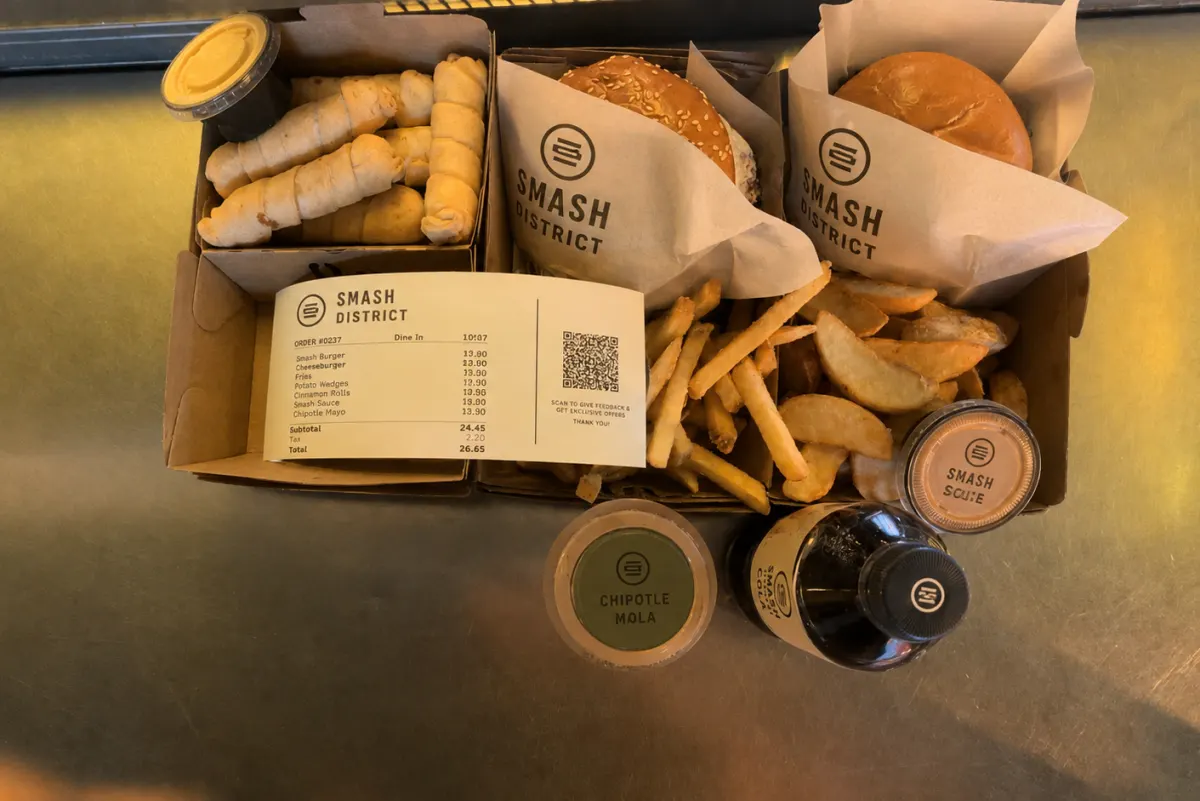
The strongest evidence is a photograph taken as the order was packed, showing every item and the order number in the same frame. Deliveroo writes exactly that standard into one category of dispute: “Any refund disputes for non-food or retail items must include photo evidence of the refunded item or items and order receipt, within the same image, at the point of packaging or prior to dispatch”.
That requirement covers non-food and retail items only, yet it is the clearest published description of a persuasive case: items and receipt together, before dispatch. A counter photo with no order number, a POS screenshot or the recollection of whoever was on shift carries no weight. The ticket proves what was ordered; the dispute turns on what was packed.
A weekly routine that catches charges before they expire
Twenty minutes, once a week, at a fixed time in the diary. Open the refund notifications, group the charges by reason, split them into disputable and fair, file the disputable ones one by one with their photograph, and write down the outcome. That record tells you next month which reasons you win and which are really process problems.
- Read the inbox, not the statement. The 7 day window runs from the email.
- Sort by reason. Missing item, wrong item and incorrect handover are the three a photograph answers.
- File individually. A message listing twenty orders is one complaint, not twenty disputes.
- Log the result. Claimed, won and lost, by site and by reason.
Be selective: disputing genuine errors buries the cases you should be winning, and the full cost of an order error is mostly the customer who does not come back.
How Bronze Tracker produces that evidence automatically
Bronze Tracker sits on the pass as a tablet. Before the bag is sealed it photographs the assembled order and checks it against the ticket using computer vision, with a median verification time under one second per photo. The image is stored against the order id, so when a refund charge arrives the evidence already exists and nobody has to reconstruct the shift.
Bronze has verified more than 5,000,000 orders across 450+ restaurants and, as of July 2026, recovered £1.89M for its customers, with 83% of disputes filed with photo evidence won. Bronze checks every order before the bag is sealed and keeps the time-stamped photo ready for the dispute: see how Bronze handles missing item claims. We compare it with a camera over the pass and a phone app in refund evidence: fixed camera, phone app or computer vision. If your charges cluster around handover, the money is in wait time at the pass.
Sources
Every quotation and deadline here comes from the platforms’ own documentation, consulted on 10 September 2026. Policies are revised and portals renamed, so confirm the current wording in your own Partner Hub before building a routine around a deadline. These are the primary sources.
- Deliveroo Partner Policies (UK), Customer compensation policy. Consulted 10 September 2026: the 7 day window, the seven partner-liable reasons and the photo evidence requirement.
- Uber Eats for Merchants (UK), Order errors learning centre. Consulted 10 September 2026: the 30 day comparison.
- DoorDash investor relations, DoorDash Completes Acquisition of Deliveroo. Consulted 10 September 2026.
- Just Eat Partner Hub (UK), Customer refunds and Just Eat Knowledge Centre (UK), How to manage refund claims. Consulted 10 September 2026: neither returned substantive content, so nothing is quoted.